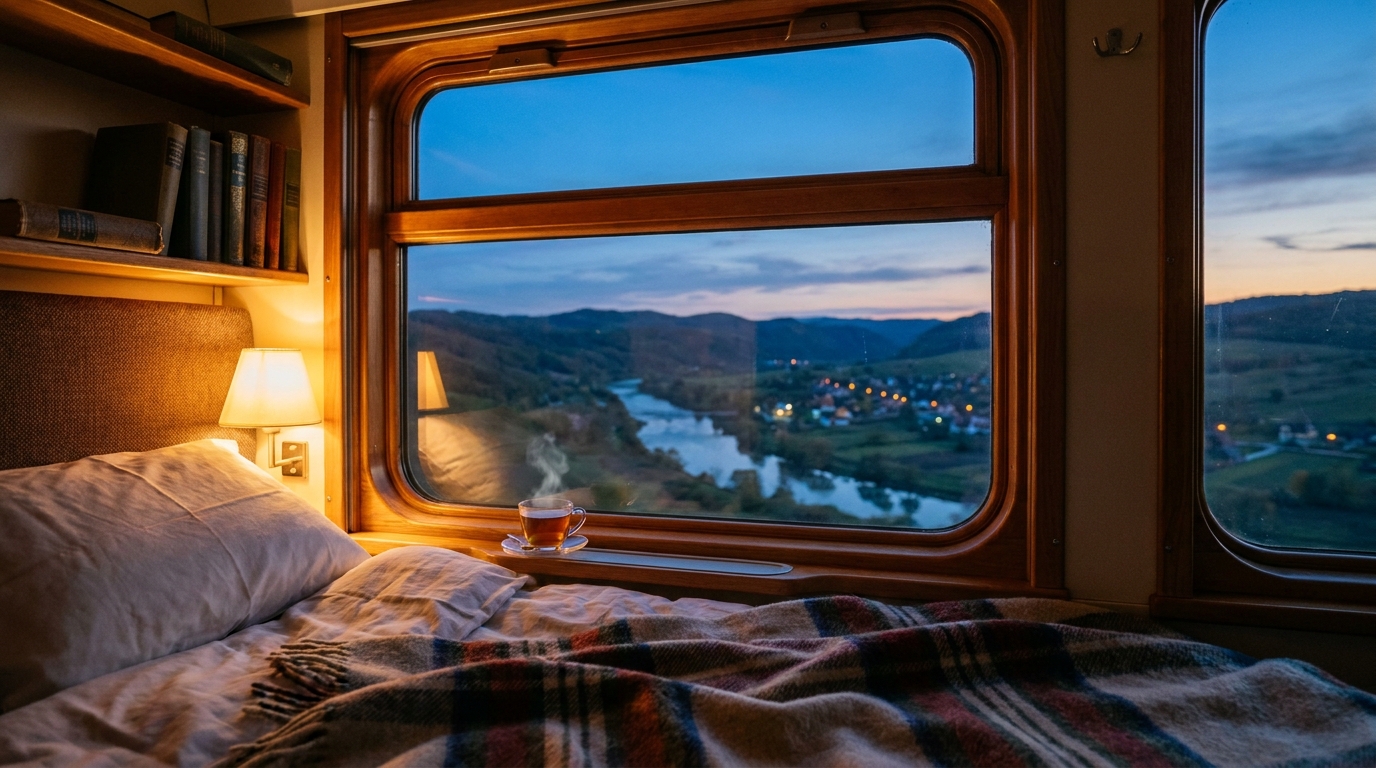
Overnight Trains in Europe: Save Money and Time
Overnight trains had a long decline, but new routes are reviving them across Europe. They're not just romantic — they're practical, rolling a long journey and a night's accommodation into one ticket. Done right, you trade a wasted travel day and a hotel bill for a moving bed and a head start on a new city.
Why take a night train
You go to sleep in one city and wake up in another, skipping a daytime travel slog and a hotel night. For longer distances, that's two savings in one — the fare partly pays for itself by replacing a night's accommodation, and you reclaim a full day you'd otherwise lose in transit. It's also a far lower-carbon way to cover ground than flying, with none of the airport rituals: no early check-in, no security queues, no transfer to a distant terminal. You board near the city centre and step off near the next one.
The revival means more options than there were a few years ago, with expanding networks linking major Central and Western European cities, Alpine routes, and connections that stitch together long north–south journeys. Before assuming a route doesn't exist, check — the map keeps growing.
When a night train makes sense
Not every journey suits one. The sweet spot is a route of roughly six to twelve hours: long enough that a full night fits, short enough that you're not stuck on board into a wasted morning. Pairs of cities far enough apart to be awkward by day but linked by a direct sleeper are ideal — you skip both the daytime journey and the hotel. For very short hops a day train is simpler, and for very long ones a single night may not cover the distance. Think of the night train as the tool for that in-between range where flying feels like overkill and a day on the rails feels like a waste.
Choose your comfort level
Most night trains offer a few tiers, and the right one depends on your budget and how well you sleep:
- Seat — the cheapest option and the least restful. Fine for the budget-focused or a shorter overnight hop, but a full night upright is hard going.
- Couchette — a shared compartment with simple bunks, usually four or six berths, with bedding provided. This is the classic budget-comfort balance and the choice most travelers land on.
- Private sleeper cabin — the most comfortable, often with a washbasin and sometimes a private shower and toilet on newer trains. You can usually book a whole cabin for privacy or a single berth within one.
A few choices sharpen the experience: fewer berths per couchette compartment means more space and a better sleep, and women-only couchettes are available on many routes if you prefer them. If you're traveling as a small group, booking a full compartment gives you the space to yourselves.
Book ahead for the best fares
Sleeper berths are limited and the cheapest ones sell out first, so book as early as you can — tickets often go on sale a few months ahead. Prices typically rise as the train fills, the same dynamic as advance rail fares generally. The gap between the early-bird couchette price and a last-minute berth can be large, so this is one trip where planning genuinely pays.
When you book, watch a couple of details:
- Pick your berth position. Lower bunks are easier to get in and out of; upper bunks are more private and sometimes cheaper.
- Confirm what's included. Bedding and a light breakfast come with sleeper fares on some services but not all.
- Check whether the train splits. Some night trains divide en route, with different carriages heading to different cities — make sure you're in the right one.
Pack a small night kit
A little preparation turns a rattly carriage into a decent night's sleep. The essentials are small and cheap:
- Earplugs and an eye mask — the two items that make the biggest difference to sleep, given corridor noise and station lights.
- A warm layer — compartment temperature is unpredictable, and a fleece or scarf doubles as a pillow.
- Water and snacks — onboard catering can be limited or absent, so don't board hungry.
- A small lockable bag for valuables — passport, phone and wallet stay with you, tucked under the pillow or in the compartment's locker if it has one.
- A toiletries kit and slip-on shoes — for easy trips down the corridor to the washroom.
A few extras smooth the night further: a power bank in case your carriage lacks outlets, a phone alarm as backup to the attendant, and a refillable bottle to fill before boarding.
Plan the morning
You'll often arrive early, before check-in time at your next accommodation. Message your hotel or hostel in advance to arrange a bag drop, and treat the early hours as a quiet, crowd-free window to explore a city before it wakes up — markets setting up, empty squares, soft morning light over the water in a coastal town. A café breakfast near the station is a fine way to shake off the night before the day's plan begins.
Practical tips
- Arrive at the platform in good time. Sleeper carriages are often at one end of a long train, and finding yours in the dark takes a minute.
- Note the attendant's role. On many sleeper services a steward checks tickets, hands out bedding and can wake you before your stop — tell them your destination if you're worried about sleeping through it.
- Eat before you board or bring a proper meal; don't count on a dining car.
- Mind border crossings. On some international routes you may need your passport accessible overnight.
- Charge your devices. Most modern sleepers have outlets, but older stock may not — bring a power bank.
Frequently asked questions
Is it safe to sleep on a night train? Generally yes. Compartments often lock from the inside, attendants are present, and keeping valuables close handles the rest. Women-only couchettes add peace of mind on routes that offer them.
Will I actually sleep? Most people sleep reasonably well in a couchette or sleeper with earplugs and an eye mask. A seat is much harder. The first hour can be noisy; it settles once the train is rolling.
Is a night train cheaper than flying plus a hotel? Often, once you count the hotel night it replaces and the airport transfers it avoids — especially if you book the berth early.
The bottom line
Night trains fold a long journey and a night's lodging into a single, low-stress, low-carbon trip, and the expanding European network makes them more useful than they've been in years. Book early for a couchette or sleeper, pack a small night kit, and plan a relaxed bag-drop morning. You'll save a hotel night, skip a wasted travel day, and wake up ready to explore a new city before the crowds arrive.

Elena has travelled to more than 40 countries, almost always with a single carry-on. She writes our practical travel-tips pieces — packing, staying safe as a solo traveller, and the small habits that make trips smoother. She's currently based in Lisbon between trips.
More about our writers →More in Budget Travel

How to Travel Europe on $50 a Day
Europe has a reputation for being expensive, but with the right choices $50 a day is genuinely doable. Here's the breakdown.
How to Find Genuinely Cheap Flights
Forget myths about clearing your cookies. These are the strategies that actually move the needle on airfare.
Free Things to Do in Europe's Coastal Cities
Some of the most memorable hours of a coastal trip cost nothing at all. Here's how to fill your days for free.