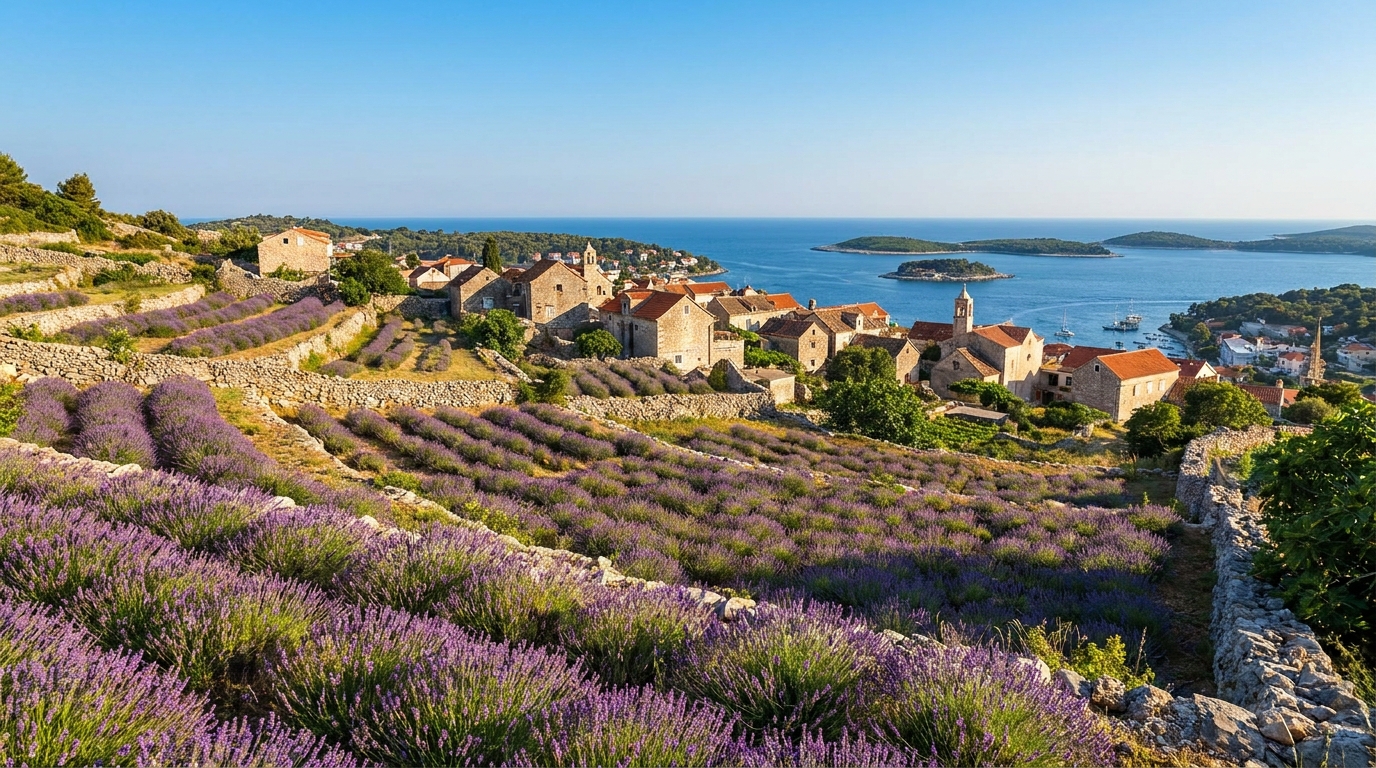
Hvar Island: Lavender Fields, Hidden Coves and Nightlife
Hvar town's marina fills with yachts in July and the bars stay loud until dawn, which is exactly what some travelers come for. But the island is far bigger and quieter than its glamorous reputation suggests. Spend a few days here and you'll trade the party-island stereotype for lavender hills, sleepy stone villages and some of the clearest water in Croatia.
Beyond the harbour town
Rent a scooter or car and head inland. The interior is striped with lavender fields and old terraces, and villages like Velo Grablje and Humac feel frozen in time. Stari Grad, on the north coast, is calmer than Hvar town and sits beside the Stari Grad Plain, an ancient Greek agricultural grid still farmed today.
A few highlights for the curious:
- Stari Grad Plain is a UNESCO World Heritage site — a 2,400-year-old grid of fields, stone walls and tracks laid out by Greek colonists and still in use. Walking or cycling through it is a quiet, time-travelling experience.
- Velo Grablje was once the centre of the island's lavender trade and now hosts a small lavender festival in summer.
- Humac is a tiny shepherds' hamlet with no cars and no electricity, near the prehistoric Grapčeva Cave.
- Jelsa, on the north coast, is a relaxed harbour town that makes a lovely, less hectic base than Hvar town.
Don't miss climbing to the Fortica (Spanish Fortress) above Hvar town at sunset for a sweeping view over the Pakleni Islands.
Find the best swimming
The Pakleni Islands, a short taxi-boat ride from Hvar town, hide a string of coves with water so clear it looks lit from below. On the main island, the pebble beaches near Jelsa and Zavala are quieter alternatives.
For more swimming inspiration:
- Taxi boats leave constantly from the Hvar town waterfront to the Pakleni Islands in summer; pick a beach club or a quiet cove depending on your mood.
- Dubovica, a postcard cove a short drive east of Hvar town, has a stone house, turquoise water and a small beach bar.
- Zavala and the south coast reward those willing to drive the narrow road (including a single-lane tunnel) with secluded pebble bays.
- Most of Hvar's beaches are pebble or rock, so a pair of water shoes makes life much more comfortable.
When to go
June and September are the sweet spot: warm sea, long days and lower prices than peak August. If you come specifically for the lavender, it usually blooms in June.
Season by season:
- June — warm, blooming, and lively without August's intensity; the best all-rounder.
- July–August — peak heat, peak prices and peak nightlife, with the busiest beaches and ferries.
- September — the sea is at its warmest after a summer of sun, crowds thin and prices ease; superb for swimming and walking.
- May and October — quieter and cheaper, lovely for hiking and villages, though some beach bars and ferries wind down.
- Winter — very quiet and local, with many businesses closed but a peaceful charm if you want solitude.
Getting there
Catamarans connect Hvar town directly with Split in about an hour, while car ferries run to Stari Grad. If you're bringing a vehicle, book the ferry ahead in summer.
A bit more detail to plan around:
- Passenger catamarans dock right in Hvar town (no cars allowed on these) — fast and convenient if you're staying car-free.
- Car ferries run to Stari Grad, about a 20-minute drive from Hvar town, so factor in onward transfer time.
- There are also connections from the mainland at Drvenik and links to neighbouring islands.
- In peak season, reserve car ferry tickets in advance and arrive early at the port, as vehicle spaces sell out.
Getting around the island
Hvar is bigger than it looks, and the best parts are spread out, so think about transport before you arrive.
- Scooter or small car gives you the freedom to reach lavender villages, hidden coves and the south coast. The roads are narrow and winding, so drive carefully.
- Local buses connect the main towns (Hvar town, Stari Grad, Jelsa) but run infrequently, especially off-season.
- Taxi boats are the easiest way to reach the Pakleni Islands and nearby coves.
Where to stay
- Hvar town is the glamorous, walkable hub — great for nightlife and the marina scene, but the priciest and noisiest in summer.
- Stari Grad is historic, calmer and well placed for the ferry and the Plain; a strong choice for a relaxed trip.
- Jelsa is a laid-back harbour town popular with families and those wanting a quieter, more local feel.
- The interior and south coast suit travellers with a car who want seclusion among the vineyards, lavender and quiet bays.
What things roughly cost
Hvar is one of the more expensive Croatian islands, particularly Hvar town in peak summer, where waterfront dining and beach clubs carry a premium. You can keep costs reasonable by staying in Stari Grad or Jelsa, eating at family konobas away from the marina, shopping at local markets, and visiting in June or September. Renting a scooter is generally cheaper than a car and ideal for the island's scale.
Common mistakes and what to skip
- Don't judge the whole island by Hvar town's party scene. The interior and other towns are a completely different, calmer world.
- Don't bring a car expecting easy parking in Hvar town — it's pedestrianised and parking is limited and pricey. Many visitors keep a car at their accommodation outside the centre.
- Don't show up in August without booking accommodation and ferries well ahead.
- Don't skip the Pakleni Islands — the swimming there is the island's signature experience.
- Skip flip-flops on pebble beaches; pack water shoes instead.
Practical tips
- Book car ferries and summer accommodation in advance, and arrive early at the port with a vehicle.
- Carry some cash for taxi boats, small konobas and village shops.
- Plan around the catamaran timetable if you're car-free, as evening connections can be limited.
- For lavender, time your June visit and head inland to the old growing villages rather than expecting fields right by the harbour.
The bottom line
Hvar genuinely has two personalities: the buzzing yacht-and-cocktail scene of the harbour town, and the slow, fragrant world of lavender hills, ancient stone fields and glass-clear coves just beyond it. Rent some wheels, base yourself somewhere calmer if peace is what you want, and you'll discover the island the day-trippers never see.

Maja grew up in Split and has been writing about the Dalmatian coast for over a decade. She spends her summers island-hopping by ferry and her winters tracking down the konobas and viewpoints the tour buses miss. She covers our destination guides for Croatia and the wider Adriatic.
More about our writers →More in Destinations
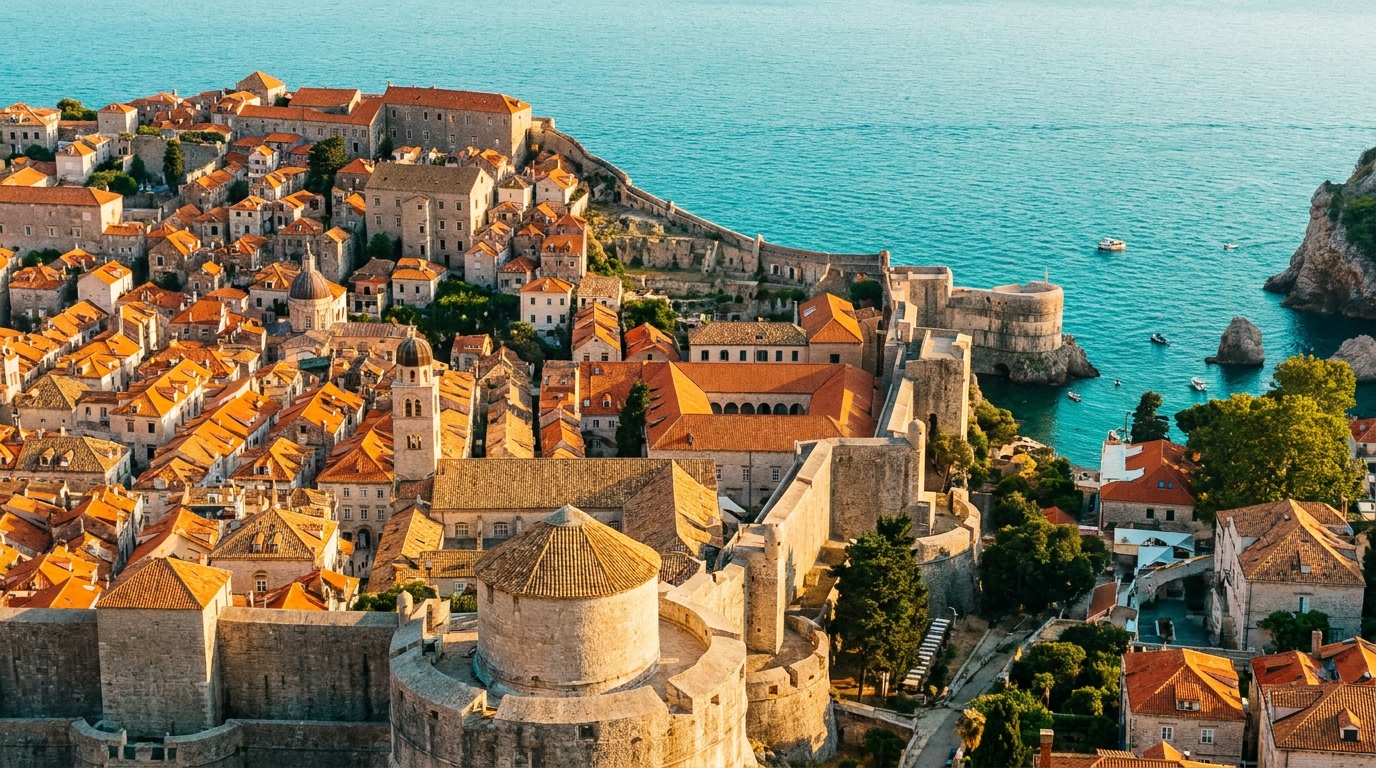
A First-Timer's Guide to Dubrovnik's Old Town
Dubrovnik's walled Old Town is compact, dramatic and easy to walk — here's how to see the best of it without the crowds.
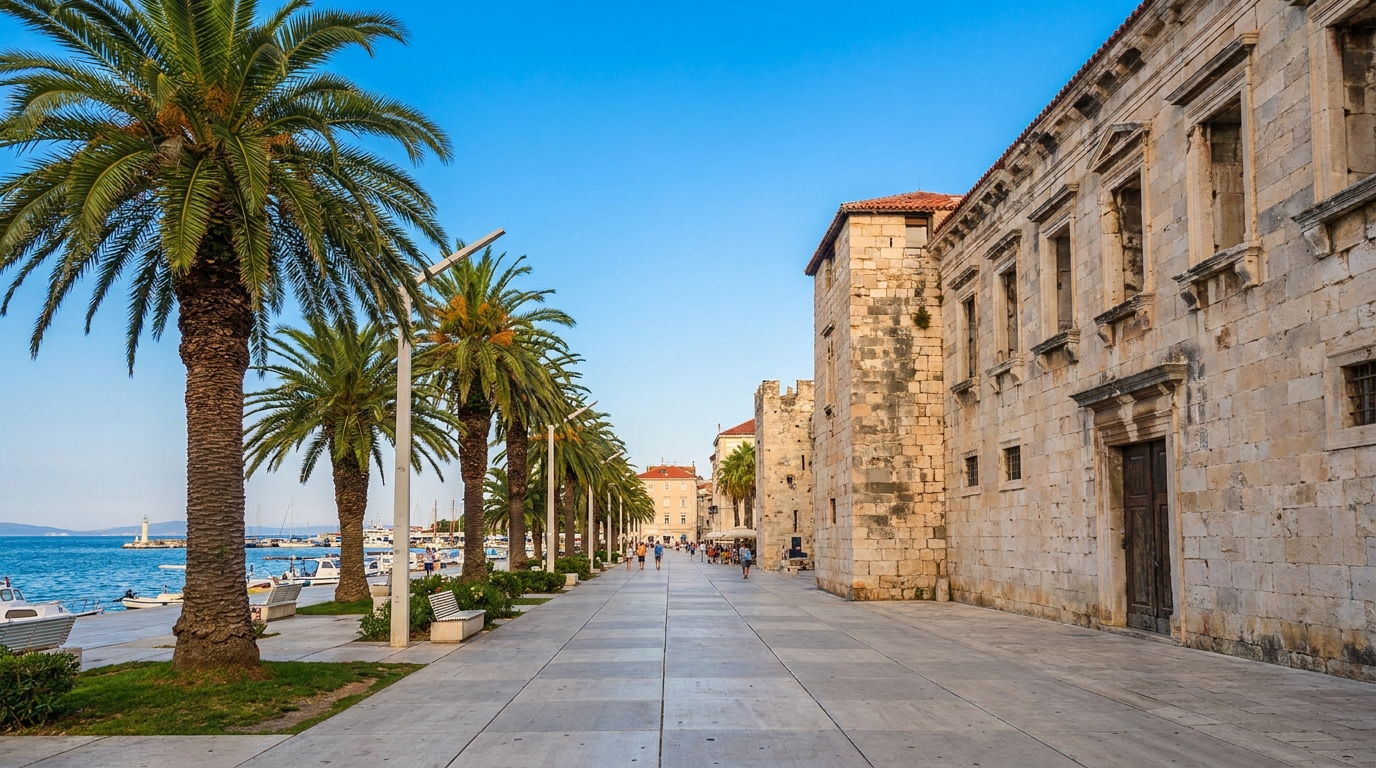
Split, Croatia: Roman Ruins, Beaches and Island Hops
Built inside a 1,700-year-old Roman palace, Split is a living city and the best base for exploring central Dalmatia.
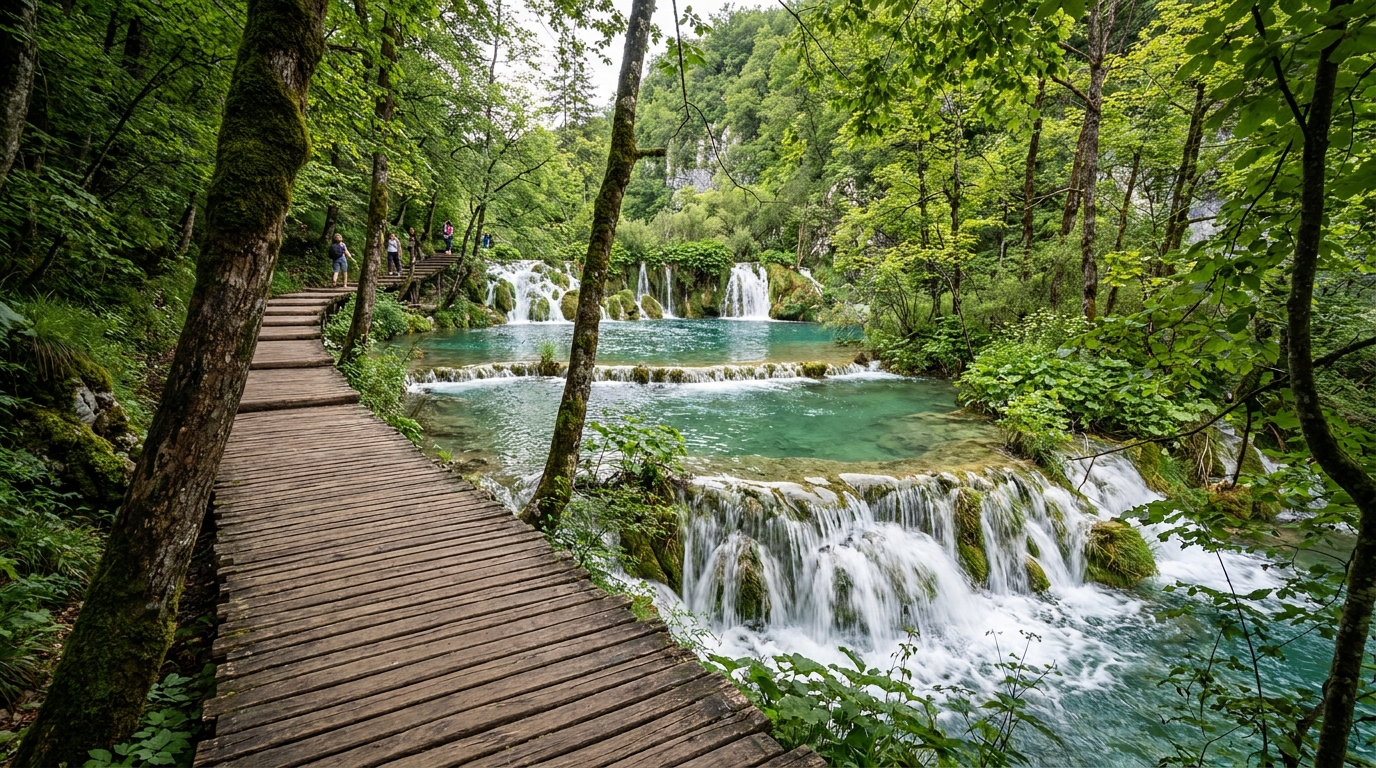
Plitvice Lakes: How to Visit Croatia's Waterfall Wonderland
Sixteen terraced lakes linked by waterfalls and wooden walkways make Plitvice unforgettable — if you arrive early and pick the right route.